Check Engine Light On? What the Codes Mean in 2026
02 October 2026 · 8 min read
The check engine light is one of the most misunderstood warnings on a dashboard. It can mean a loose gas cap, or it can mean a failing catalytic converter that will eventually leave you stranded. Because the light looks the same either way, a lot of drivers either panic and rush to a shop for nothing, or ignore it for months while a small, cheap problem turns into an expensive one. Neither reaction is right, and the difference between them usually comes down to a few minutes of reading the actual code rather than guessing from the light alone.
Here's what the light actually tells you, how to read the first clue yourself, how urgent different situations actually are, and where drivers in the Dallas area take their cars when the dash lights up.
What the Check Engine Light Actually Means
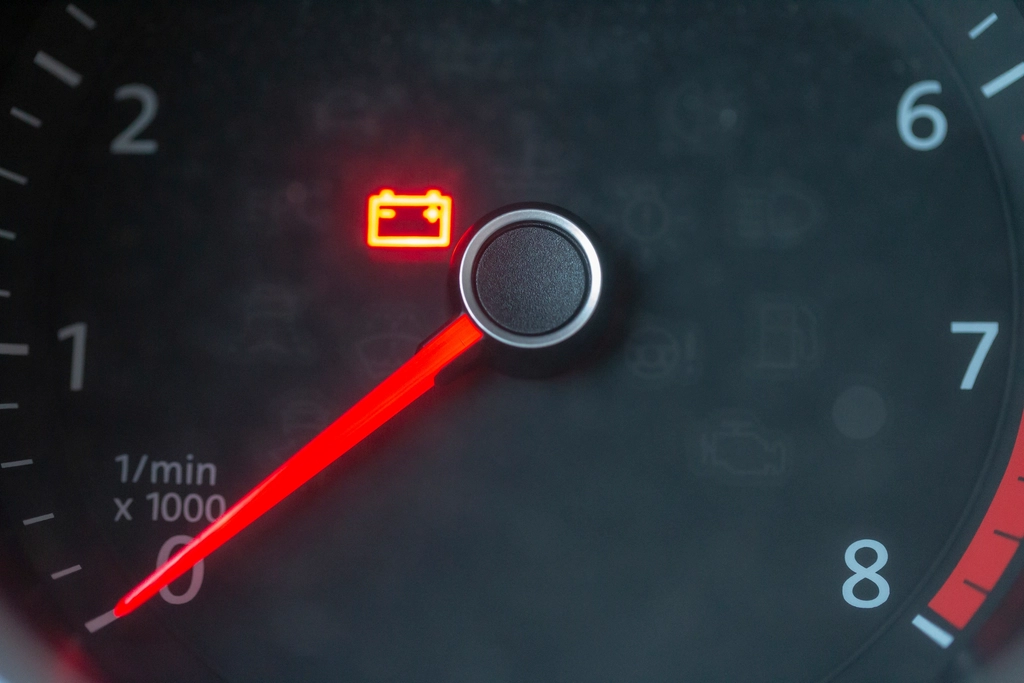
The check engine light — officially the malfunction indicator lamp, or MIL — is tied to your car's onboard diagnostics system (OBD-II on virtually every vehicle sold in the US since 1996). When a sensor detects a reading outside its expected range, the engine computer stores a trouble code and turns on the light. That's it. The light itself carries no information about severity — it's a flag, not a diagnosis.
Trouble codes follow a standard format: a letter (P for powertrain, B for body, C for chassis, U for network) followed by four digits. A generic code like P0420 means roughly the same thing on a Honda and a Ford; a manufacturer-specific code in the same range can mean something different depending on the brand. That's one reason a code reader alone doesn't always give you the full picture — the code points to a system, not necessarily the exact failed part.
Steady vs. Flashing: How Urgent Is It
The behavior of the light matters more than most drivers realize.
A steady check engine light means a fault has been detected, but the car is safe to drive to a shop under normal conditions. Many drivers get a lot of parking-lot mileage out of ignoring a steady light, but doing so risks cascading damage — an oxygen sensor code left unaddressed, for example, commonly leads to a fouled catalytic converter down the line.
A flashing check engine light signals an active misfire that is dumping unburned fuel into the exhaust system, which can overheat and destroy the catalytic converter within minutes of driving. If the light is flashing, reduce speed, avoid heavy acceleration, and get the car to a shop or have it towed rather than continuing to drive normally.
If a red oil pressure or temperature warning light comes on alongside the check engine light, treat that as the more urgent signal — stop driving and have the car looked at before continuing.
These are among the most frequently reported OBD-II codes. The table below is a starting point for understanding the system involved — it is not a substitute for an actual diagnostic read, since the same code can have multiple root causes.
Code range
System
Typical trigger
Urgency
P0300–P0308
Misfire detection
Spark plugs, coils, fuel injectors
High if flashing
P0420 / P0430
Catalytic converter efficiency
Worn catalyst, upstream O2 sensor fault
Moderate
P0171 / P0174
Fuel trim (lean condition)
Vacuum leak, dirty MAF sensor
Moderate
P0442 / P0455
EVAP system leak
Loose or cracked gas cap, EVAP hose
Low
P0128
Coolant thermostat
Stuck-open thermostat
Low to moderate
P0700
Transmission control system
Internal transmission fault code stored
High
P0A80–P0A9F
Hybrid battery system
Hybrid battery pack or control module fault
Moderate to high
A loose gas cap (P0442/P0455 family) is genuinely one of the most common reasons the light comes on, and it costs nothing to rule out — tighten the cap until it clicks and see if the light clears after a few drive cycles.
Can You Read the Code Yourself?
Yes, and it's worth doing before a shop visit. Many auto parts stores will read the code for free, and inexpensive Bluetooth OBD-II adapters paired with a phone app will do the same. Reading the code gives you the system involved (for example, "P0171 — system too lean, bank 1") but not necessarily the repair. Two cars with the identical code can need completely different fixes — one a $20 vacuum hose, the other a few hours of diagnostic labor to trace an intermittent sensor fault. This is where a shop with a proper scan tool and some diagnostic time earns its keep.
Write down the exact code before clearing it, even if the light goes off on its own after a drive or two. A code that clears itself without the underlying issue being fixed will typically come back, and having the original code on hand saves a shop from having to wait for the fault to reset and reappear before they can start diagnosing it.
Mistakes Drivers Make With a Check Engine Light
A few habits turn a minor issue into a bigger bill:
Clearing the code without fixing the cause. Disconnecting the battery or using a reader's "clear code" function turns the light off, but the underlying fault is still there and the light will return — often after the freeze-frame data that would have helped a mechanic diagnose it faster has already reset.
Assuming a passed emissions test means nothing is wrong. A code can be stored without yet affecting tailpipe emissions enough to fail a test, particularly early in a developing fault.
Ignoring a light that "goes away by itself." An intermittent code that clears after a drive cycle is a sign the fault is intermittent, not that it resolved — vacuum leaks and marginal sensor connections are notorious for this pattern.
Buying parts based on the code alone. A P0420 code names the catalytic converter system, but the root cause is frequently an upstream oxygen sensor. Replacing the converter first, without testing the sensor, is one of the most common ways drivers overspend on this particular code.
A proper diagnostic isn't just plugging in a scanner and reading whatever code pops up. A thorough shop will pull the stored codes and freeze-frame data (the conditions present when the fault was recorded — engine load, temperature, RPM), then use that information to test the specific component rather than guessing. Ask whether the diagnostic fee is applied toward the repair if you move forward, and ask for the specific part or system identified before authorizing work — a code description alone ("P0420") isn't a repair estimate.
In the Dallas area, general repair shops that advertise computer diagnostics as part of their standard intake process include:
Both shops above handle the kind of general diagnostic work that covers the majority of check engine light visits — misfires, sensor faults, and emissions-related codes.
Electrical, Transmission and Hybrid-Specific Codes
Not every code is a straightforward sensor swap. Some point to systems that benefit from a specialist rather than a generalist:
Electrical system codes (charging system faults, intermittent network communication errors) often need a shop with dedicated electrical diagnostic equipment, since the fault can be in wiring rather than a single component.
Transmission codes (the P0700 family) mean the transmission control module has logged an internal fault, and driving on one for an extended period risks further damage to the transmission itself.
Hybrid and EV battery system codes require equipment built for high-voltage packs, which not every general shop carries.
Drivers sometimes assume any dashboard light is "the check engine light," but the ABS light, the brake warning light, and the check engine light point to entirely different systems and are diagnosed differently. A brake or ABS warning light means the brake system's own sensors have flagged a fault — different wiring, different scan tool protocols, and typically a brake-focused shop rather than a general engine diagnostic.
Every shop sets its own diagnostic and labor rates, so check current rates directly with the shop rather than relying on a number from an article — prices vary by vehicle, by the complexity of the fault, and by region. What's consistent across shops is the general structure: a diagnostic fee to identify the fault (sometimes waived or credited if you proceed with the repair), followed by parts and labor for the actual fix. Ask for that breakdown in writing before authorizing work, regardless of which shop you use.
It's also reasonable to ask whether the shop road-tests the vehicle after a repair to confirm the code doesn't return, and how they handle a case where the first fix doesn't resolve the fault — a reputable shop will have a clear answer to both questions rather than treating the diagnostic as a one-shot guess.
A check engine light is information, not a verdict. A steady light means get it checked soon; a flashing light means stop driving normally and get it looked at now. Reading the code yourself — for free, at a parts store or with a cheap adapter — tells you which system is involved, but a proper diagnostic with freeze-frame data is what actually identifies the fix. Match the problem to the right kind of shop: general repair for most sensor and misfire codes, electrical specialists for wiring and charging faults, transmission shops for drivetrain codes, and EV/hybrid specialists for high-voltage battery faults. That alone will save most drivers from paying for the wrong repair.