


19 Oct 2026 · 8 min read
Getting Your Car Fixed in Santa Ana: A 2026 Neighborhood Guide
A category-by-category look at where Santa Ana drivers go for repair, tires, brakes, transmissions, body work and glass in 2026.
santa ana california auto repair11 October 2026 · 9 min read
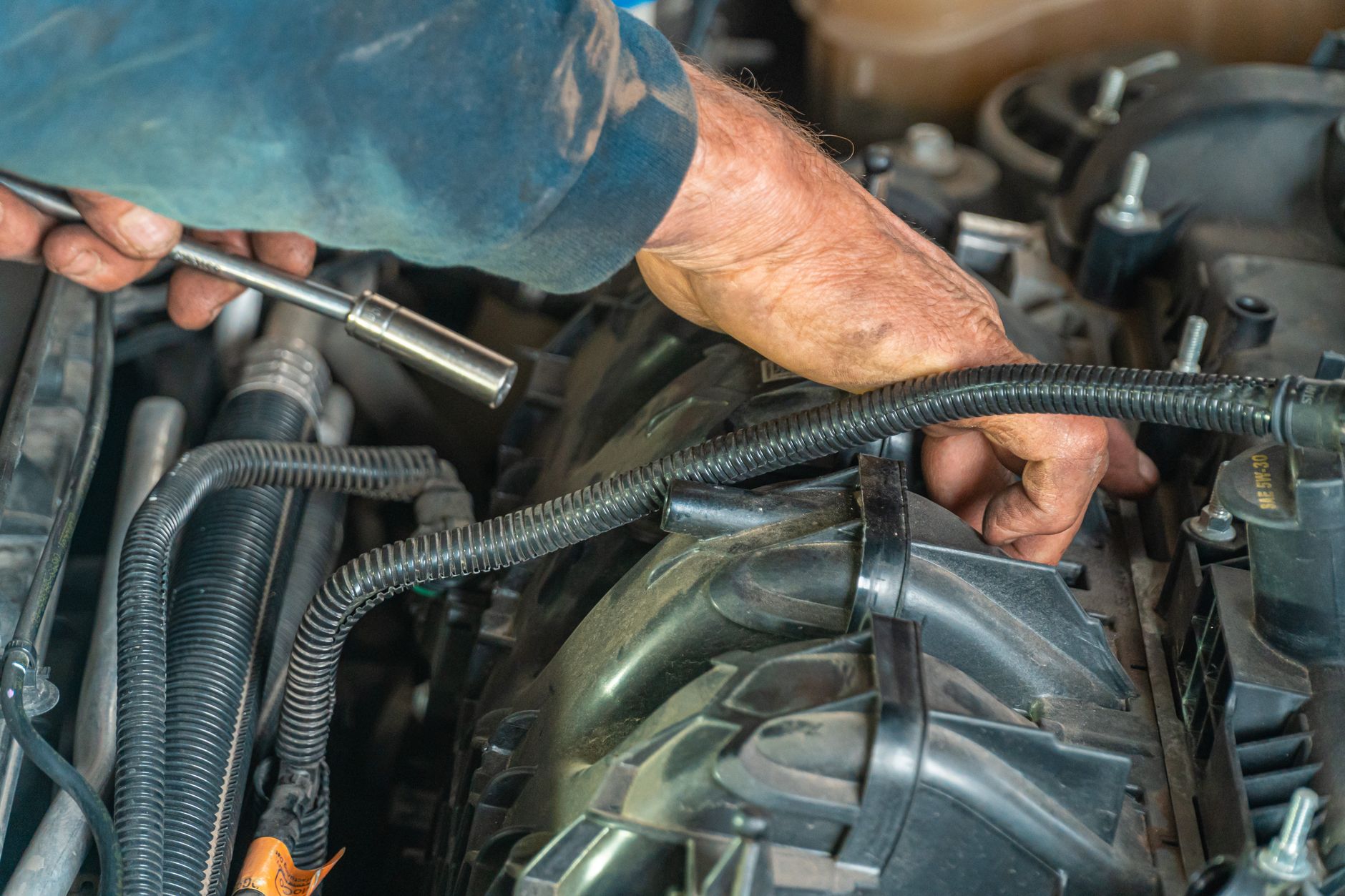
Every summer, Bakersfield drivers find out the hard way that their car's air conditioning has quietly stopped working. Afternoon highs in the Central Valley regularly clear 100°F from June through September, and a weak or warm-air AC system turns a normal commute on Highway 99 or Rosedale Highway into a genuinely uncomfortable one. The usual fix people reach for is "get it recharged" — but a recharge is only the right repair for some of the problems that make AC fail, and doing it on a system that's leaking just buys a few weeks before the same complaint comes back.
This guide walks through how a car's AC system actually works, what a shop does during a real recharge service, why topping off refrigerant doesn't always solve the underlying problem, and where to get the work done in Bakersfield.
Refrigerant systems are sealed, but no seal is perfect forever. O-rings dry out, hose fittings seep, and condensers mounted at the front of the car pick up road debris and corrosion over years of driving. In milder climates a slow leak might go unnoticed for a season because the AC still blows reasonably cool air. In Bakersfield's heat, the same slow leak shows up fast — the system has far less margin before "cool enough" turns into "barely cooler than outside."
Vehicles that sit outside through Central Valley summers also run their compressors harder and longer, which accelerates wear on the compressor clutch and shaft seal. That's part of why AC repair and recharge work is a steady, year-round line of business for general repair shops here, not just a once-in-a-while service.
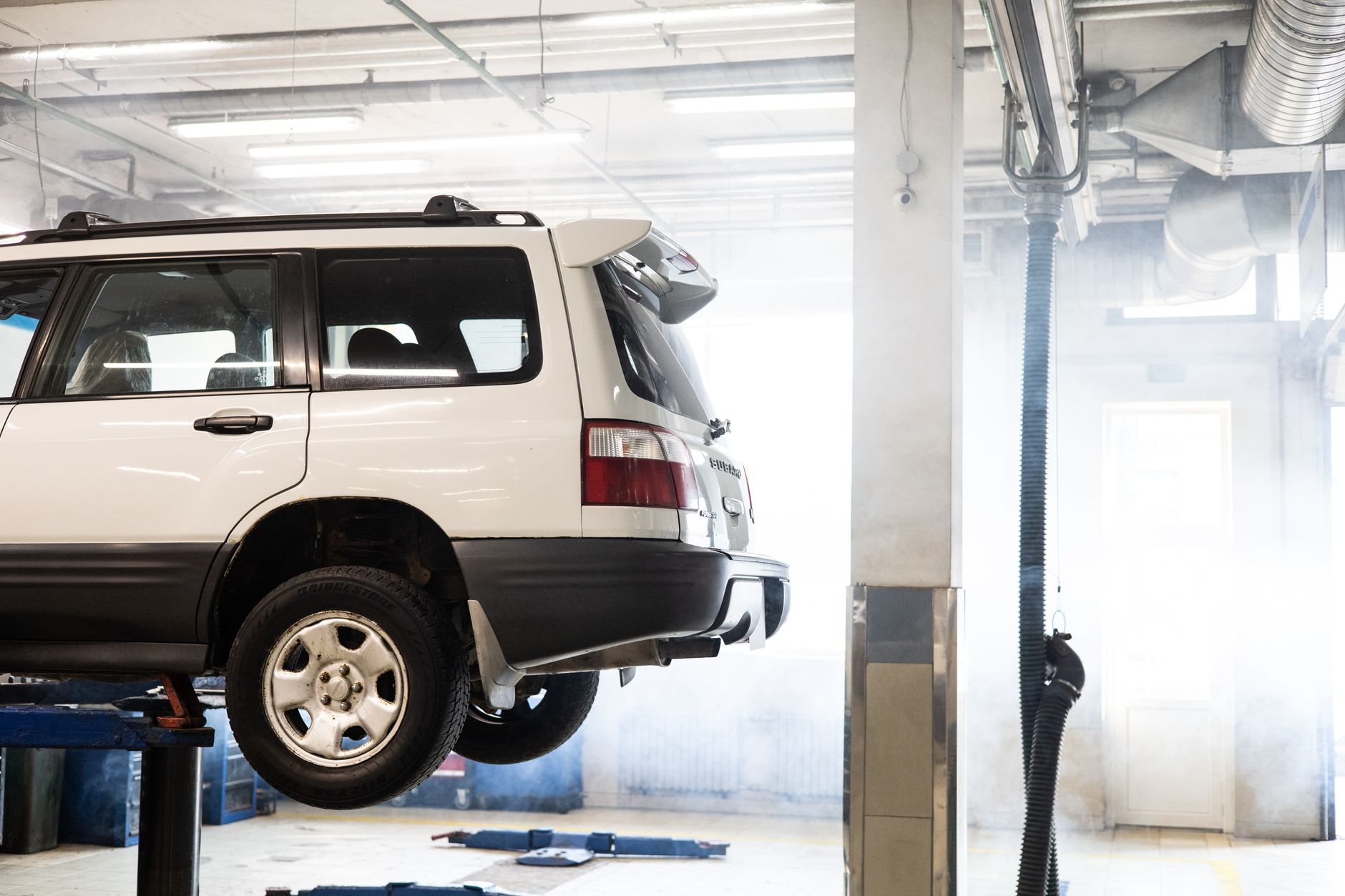
A vehicle AC system is a closed loop built around four main parts: the compressor, the condenser, the expansion device (an orifice tube or expansion valve), and the evaporator. The compressor pressurizes refrigerant gas and pushes it to the condenser — the radiator-like unit at the front of the car — where it releases heat and turns into a liquid. That liquid passes through the expansion device, which drops its pressure sharply, and into the evaporator inside the dashboard, where it absorbs heat from the cabin air and evaporates back into a gas. A blower fan pushes air across the evaporator and into the cabin, which is why you feel cold air at the vents.
The whole cycle depends on the system holding the correct amount of refrigerant at the correct pressure. Too little refrigerant, and the compressor can't build enough pressure to cool effectively — or, on many modern systems, a low-pressure switch will stop the compressor from running at all to protect it.
A handful of symptoms point toward something beyond a simple top-off:
Auto Repair Shops · Bakersfield, California
Shops that handle auto air conditioning work alongside general repair, like the one above, are often the first stop for diagnosing whether a weak-AC complaint is a refrigerant issue, an electrical issue, or something in the blower or ductwork.
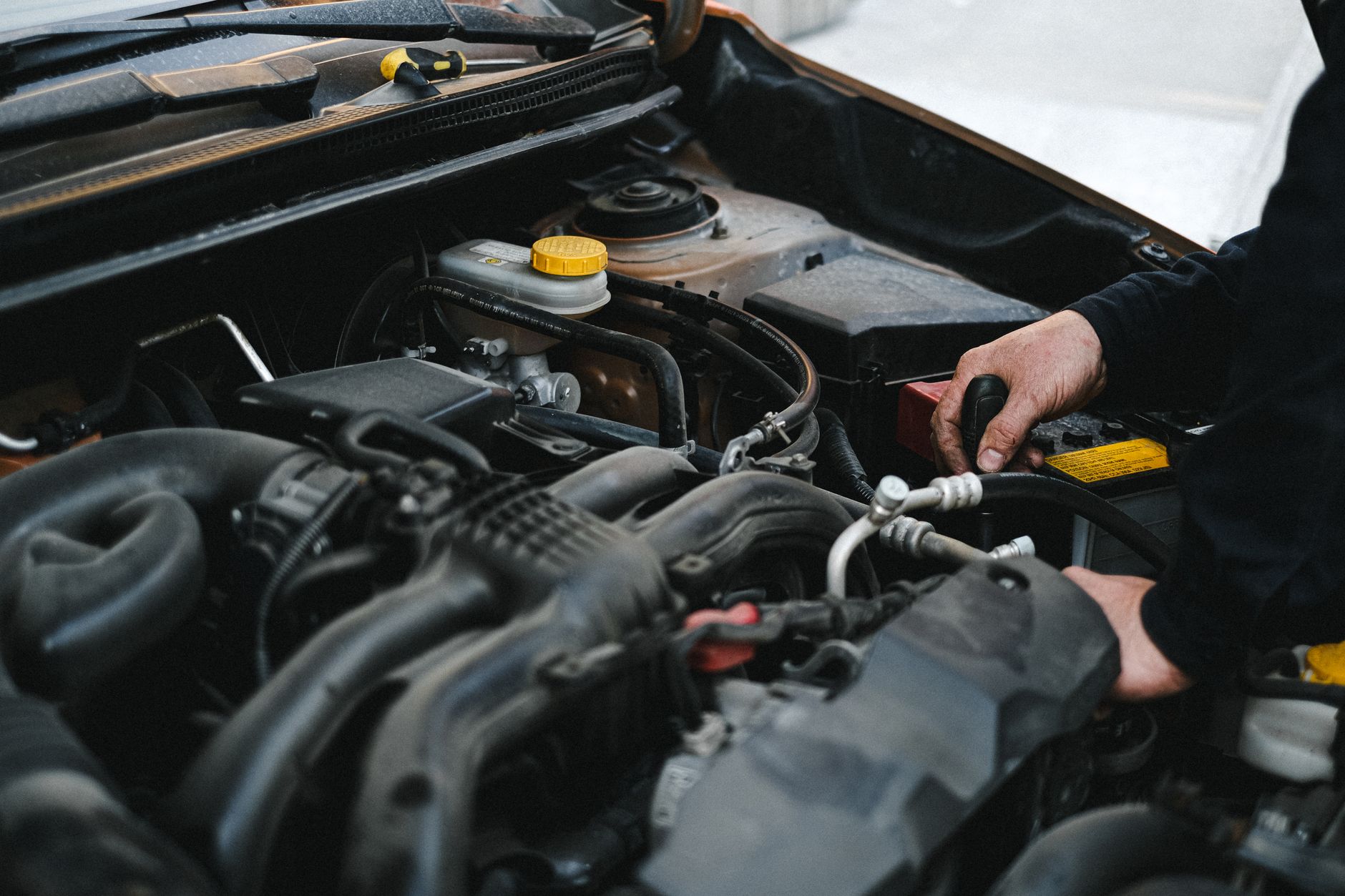
A proper recharge is not just connecting a can of refrigerant to a port. The standard process a shop follows looks like this:
That's a meaningfully different job than a five-minute top-off, and it's why a real recharge service at a shop costs more than a drugstore refrigerant can — the equipment alone (recovery machine, vacuum pump, manifold gauges) represents a serious investment that a shop has to put to work on every car that comes through the door.
Most vehicles built before roughly the mid-2010s use R-134a refrigerant. Many newer vehicles — and an increasing share of the fleet each year — use R-1234yf, a refrigerant with a much lower global warming potential that automakers adopted partly in response to tightening environmental rules. The two refrigerants are not interchangeable, use different fittings specifically to prevent cross-contamination, and require different recovery and recharge equipment. Mixing them, or recharging a yf system with a universal "fits everything" can from the auto parts aisle, can damage the compressor and contaminate the whole system. If your car is a newer model, it's worth confirming with the shop ahead of time that they're set up for R-1234yf specifically — not every independent shop has invested in the newer equipment yet.
Refrigerant doesn't get consumed the way oil or coolant can burn off gradually in a healthy system — a sealed AC loop that's working correctly holds its charge for years. If a system needs refrigerant added, refrigerant is leaving somewhere, and adding more without finding and repairing that point just delays the next warm-air complaint. Common leak points include the compressor shaft seal, the condenser (especially after a front-end impact, even a minor one), rubber hose connections that have hardened with age, and the evaporator core itself, which is the most labor-intensive of the group to replace because it sits behind the dashboard.
Auto Repair Shops · Bakersfield, California
A shop that finds and fixes the actual leak point — rather than just recharging and sending the car out the door — is doing the more thorough (and ultimately cheaper, over time) repair, even if it takes longer and costs more up front than a simple top-off.
The small cans sold at auto parts stores let a driver add refrigerant through the low-pressure port without any of the recovery, evacuation, or leak-detection steps a shop performs. That can mask a problem temporarily, but it carries real risks: overcharging a system that doesn't have a working low-pressure cutoff, adding refrigerant on top of moisture-contaminated gas that's already in a leaking system, and in the case of the stop-leak sealants bundled with some kits, gumming up the expansion valve or orifice tube in a way that turns a simple refrigerant leak into a parts-replacement job. If a DIY can doesn't restore cooling within a day or two, that's a strong signal the problem is bigger than a refrigerant top-off and is better handed to a shop before more parts are affected.
| Situation | Likely cause | Typical fix |
|---|---|---|
| AC was fine last year, weak this summer | Minor seepage through aging seals | Recharge, often enough on its own for a season or two |
| Cold air faded over a few weeks | Active leak at a hose, fitting, or seal | Leak detection, then repair of the specific point, then recharge |
| No cold air at all, compressor not engaging | Electrical fault, low-pressure cutoff, or failed compressor | Diagnosis of the compressor clutch, pressure switch, and wiring before any refrigerant work |
| Hissing or visible oily residue | Damaged line, fitting, or condenser | Component replacement, then recharge |
| Weak airflow but cold when it blows | Blower motor, resistor, or duct/cabin filter issue | Unrelated to refrigerant — electrical and airflow diagnosis |
Exact pricing depends on the vehicle, the refrigerant type, and what's actually found during diagnosis, so check current rates with a shop directly rather than assuming a flat number — a straightforward recharge and a compressor replacement are very different jobs priced very differently.
Bakersfield has a mix of AC specialists and general repair shops that handle AC work alongside everything else. A specialist shop that does nothing but climate control work all day tends to have the diagnostic experience to spot a tricky intermittent leak quickly; a full-service shop is convenient if the AC issue turns out to be tied to something else, like a serpentine belt or an electrical fault, that the same visit can address.
Auto Air Conditioning · Bakersfield, California
Auto Repair Shops · Bakersfield, California
Auto Repair Shops · Bakersfield, California
Auto Repair Shops · Bakersfield, California
For import vehicles specifically, a shop that specializes in European or import makes is worth seeking out, since AC components, fittings, and service procedures can differ from domestic vehicles in ways that matter for parts availability and labor time.
If your car needs attention after hours or won't start at all with the AC issue, a mobile mechanic can at least diagnose the problem at your home or workplace before you decide where the repair itself gets done.
Auto Repair Shops · Bakersfield, California
The full list of auto repair shops in Bakersfield covers general repair options beyond AC specifically, and the tire shops in Bakersfield list is worth a look too, since a serpentine belt replacement — sometimes bundled with AC compressor work — is routine business for shops that also handle tires and brakes.
A few habits reduce the odds of an unexpected AC failure mid-summer:
An AC recharge is the right fix when a system has lost a small, gradual amount of refrigerant over time and everything else — compressor, lines, condenser — is in good shape. It's the wrong fix, or at best a very temporary one, when air is going warm quickly, when there's an audible leak, or when the compressor won't engage at all. Before paying for a recharge, ask the shop whether they're doing a vacuum and leak check as part of the service, not just adding refrigerant — that's the difference between a repair that lasts and one that has you back in the waiting room in a month. For Bakersfield drivers, with Central Valley summers pushing every AC system harder than mild-climate driving would, that upfront diagnostic step is worth the extra time.
19 Oct 2026 · 8 min read
A category-by-category look at where Santa Ana drivers go for repair, tires, brakes, transmissions, body work and glass in 2026.
santa ana california auto repair
18 Oct 2026 · 7 min read
What sets diesel engine service apart in 2026, the problems Houston diesel owners run into most, and how to find a shop equipped to handle them.
houston texas diesel repair
17 Oct 2026 · 8 min read
What pulling, uneven tire wear and an off-center steering wheel mean, and how Anaheim drivers can get an alignment checked and fixed.
anaheim california wheel alignment